The Future of Solar Powered Gadgets: How Xnor's Breakthrough is Revolutionizing Low-Cost, Low-Power Deep Learning
Have you ever wondered what it would be like to have a solar-powered gadget that can perform complex tasks without draining your bank account or the planet's resources? Well, wonder no more! Xnor, a company that emerged from the Allen Institute for Artificial Intelligence, has come up with a groundbreaking solution that is set to revolutionize the world of low-cost, low-power deep learning.
Picture this: a device no bigger than a saltine cracker, equipped with the power to perform state-of-the-art computer vision tasks. Sounds impressive, right? Well, that's exactly what Xnor has achieved with their ingenious solar-powered AI hardware. So, hold on to your hats as we dive into the exciting world of Xnor's breakthrough.
Powering the Future with Solar Energy
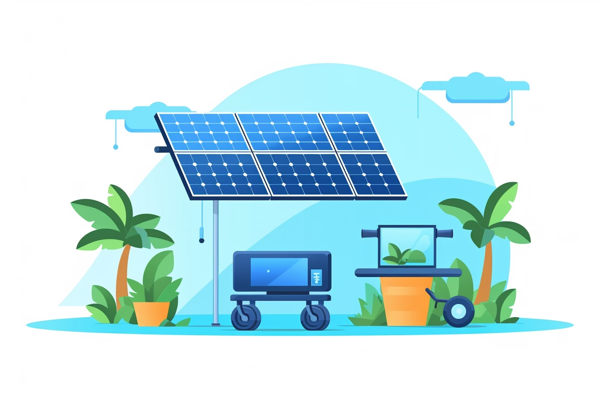
Xnor's ultimate goal was to develop an AI platform that could operate without a battery. Yes, you heard that right! A device that can perform real-time computer vision tasks, powered solely by the sun. It's like having your own personal AI assistant that doesn't rely on conventional power sources. Say goodbye to constantly searching for outlets or fumbling with charging cables!
But how did Xnor manage to pull it off? Well, they ingeniously harnessed the power of a small solar cell to energize their device. It's like having a solar-powered calculator, but on steroids! And let's face it, calculators were cool back in the day, right?
Small but Mighty
Now, let's take a closer look at the device itself. This tiny powerhouse consists of a camera, an FPGA (Field-Programmable Gate Array), some memory, and, of course, that trusty little solar cell. It's a simple setup, but don't let its simplicity fool you – it's capable of performing intricate deep learning tasks with minimal power consumption.
In fact, this extraordinary gadget can run on a mere hundred millivolts of power. That's right, we're talking about a device that can do some serious heavy lifting while sipping on power like a dainty tea cup. And just in case you're wondering, it also has a supercapacitor for energy storage, because even the sun needs a little help sometimes.
The Power of Possibilities
So, why is Xnor's breakthrough such a big deal? Well, it's not just about creating a solar-powered smart camera. It's about taking deep learning models to a whole new level by enabling them to run on low-cost, low-power devices. This paradigm shift opens up a world of possibilities for applications that require privacy and low latency.
Imagine having a security camera that doesn't rely on an external power source or compromising your privacy by streaming your every move to the cloud. Or how about a smart home device that can recognize your face and adjust the temperature accordingly, without draining your energy bill? The opportunities are endless!
Moreover, Xnor's platform and software can be customized for individual projects or hardware. This means that innovative minds like yours can create entirely new product categories that have lower power and space requirements. We're talking about a future where solar-powered gadgets are as common as smartphones, but without the hefty price tag or the environmental guilt.
Let the Solar-Powered Revolution Begin
Xnor's breakthrough in low-cost, low-power deep learning is paving the way for a brighter and more sustainable future. With their solar-powered AI hardware, we can finally break free from the shackles of conventional power sources and embrace the untapped potential of solar energy.
So, get ready to bid adieu to power cords, batteries, and the constant fear of running out of juice at the most inconvenient times. The future is here, my friends, and it's powered by the sun – courtesy of Xnor and their ingenious solar-powered gadgets.
Disclaimer: No, we don't have any affiliation with Xnor, nor do we own any of their solar-powered gadgets. But we can dream, can't we?
About the author
Oliver Bennett is a tech enthusiast with a special interest in renewable energy solutions. With a degree in Engineering and years of experience in the tech industry, he has spent the last decade exploring the world of solar powered gadgets. From solar-powered chargers to solar-powered cars, Oliver has researched, tested, and written about them all. His passion for clean energy and sustainable solutions fuels his writing, providing his readers with not only information but also practical advice on embracing solar power in their everyday lives.
Wow, this is mind-blowing! I had no idea that solar powered gadgets could revolutionize deep learning. Xnor's breakthrough sounds like a game-changer for low-cost, low-power devices. Can't wait to see what the future holds!
foshiznit - September 26, 2023
Wow, this is super interesting! I had no idea Xnor was making such advancements in solar-powered gadgets. Can't wait to see how this revolutionizes deep learning. Great post!



Hardbark - September 27, 2023
Wow, this is mind-blowing! I had no idea that solar powered gadgets could revolutionize deep learning. Xnor's breakthrough sounds like a game-changer for low-cost, low-power devices. Can't wait to see what the future holds!
foshiznit - September 26, 2023
Wow, this is super interesting! I had no idea Xnor was making such advancements in solar-powered gadgets. Can't wait to see how this revolutionizes deep learning. Great post!